We launch the first pathological anatomy laboratory in Burundi in collaboration with the Kyrikú Foundation
It all started last year. ElDr. Married, from the Ruber International Hospital, operated on Gilby, a boy from Burundi 14 years with very disfiguring burns
ElDr. Ricardo Ruiz, head of the Dermatology service at this hospital and director of the International Dermatology Clinic welcomed him into his home and Gilby became friends with his children.. “It was curious”, the doctor tells, “because after surgery, with the material comfort with which he lived in Madrid, “His dream was to return to Burundi and show his brothers how well it had turned out.”.
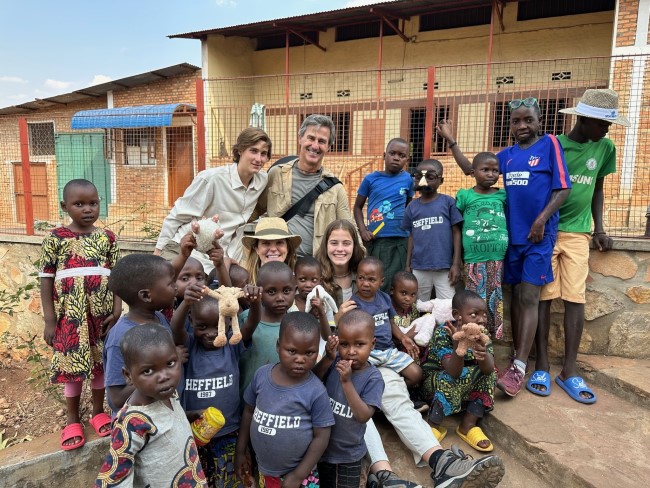
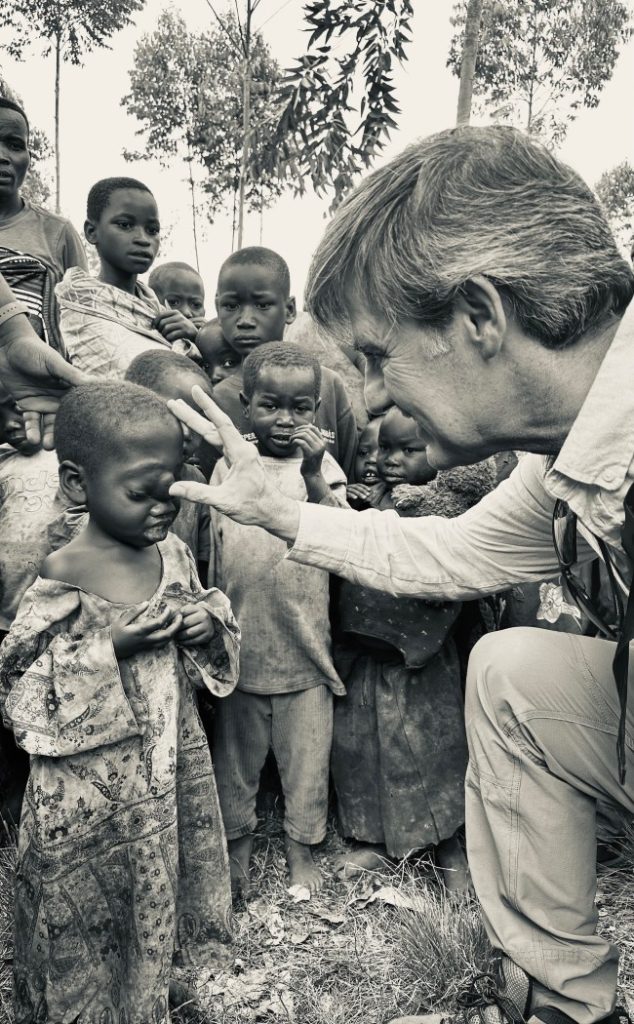
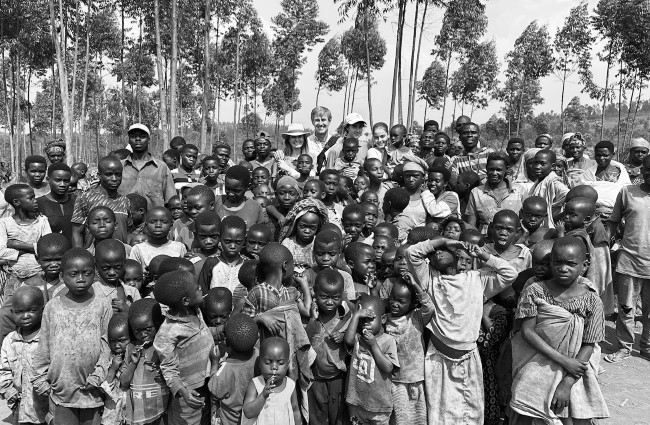
Thanks to the support and involvement of Dr.. Martha Conde, president of the Kyrikú Foundation, which has an important presence in Burundi, el Dr. Ruiz, patron of this foundation, He traveled to the African country and saw first-hand the dermatological needs that Burundian children had.
They saw dozens of children with all types of undiagnosed and untreated skin lesions. It caught their attention that, in the operating room, surgeons threw away the pieces they removed, since they did not have a laboratory to analyze the material. This deficiency made it difficult to accurately diagnose and adequately treat various skin diseases and other conditions.. With the support of Recover Foundation, el Dr. Ruiz proposed to the Kyrikú Foundation, fill this gap in Burundi's health infrastructure.
Why this laboratory
The activity of a pathological anatomy laboratory is an essential part of modern medicine since it is the way to safely diagnose diseases in order to establish the appropriate treatment..
“The Burundi laboratory will help us, first of all, to be able to diagnose whether a lesion that appears on the skin or in any internal organ is infectious or tumorous., it is either malignant or benign. Only with this information can we propose an antibiotic treatment., if it were infectious, or surgical if it were malignant”, explains the doctor.
The second pillar of the laboratory will be to be able to perform vaginal cytology to be able to diagnose cervical cancer early.. And the third mission of the laboratory will be to determine, through biopsies, the origin of skin ulcers. A huge percentage of children in Burundi have skin ulcers, which are very disabling and often reach the bone, that gets infected. With this laboratory it will be possible to know the origin of these ulcers, in order to establish effective treatment.
Two diseases that could be eradicated
On your journey, el Dr. Ruiz detected pathologies such as yaws and Buruli ulcer, which are two of the more than twenty neglected tropical diseases that exist in the world according to the Munida Health Organization.. He soon It is a tropical endemic disease caused by a bacteria very similar to the one that causes syphilis.. Although this disease is also known as “children's syphilis”, It is not spread sexually but rather through direct skin-to-skin contact.. The disease manifests itself on the skin in the form of large ulcers and scabs., and with inflammation in the bones.
“The consequences of this infection are terrible, with the formation of enormous disfiguring and painful scars, as well as bone destruction. The surprising thing is that with three pills of azithromycin the disease is completely cured. And by treating the population preventively, the disease can be eradicated from a region.”, assures the head of the Dermatology service at the Ruber International Hospital.
On the other hand, Buruli ulcer is a chronic disease caused by an environmental mycobacteria: Mycobacterium ulcerans. This disease, which often affects the skin and, sometimes, to the bone, can cause permanent disfigurement and long-term disability. The mechanism of transmission of the disease is not known nor is there any way to prevent it., but with adequate antibiotic treatment the prognosis is very good.
“The creation of this laboratory marks an important milestone in healthcare in Burundi”, commented Dr.. Ricardo Ruiz. “It is an important step towards strengthening health infrastructure and improving the quality of life of thousands of Burundians.”. And none of this would have been possible without the support of Dr.. Martha Conde, “the soul of this initiative”.
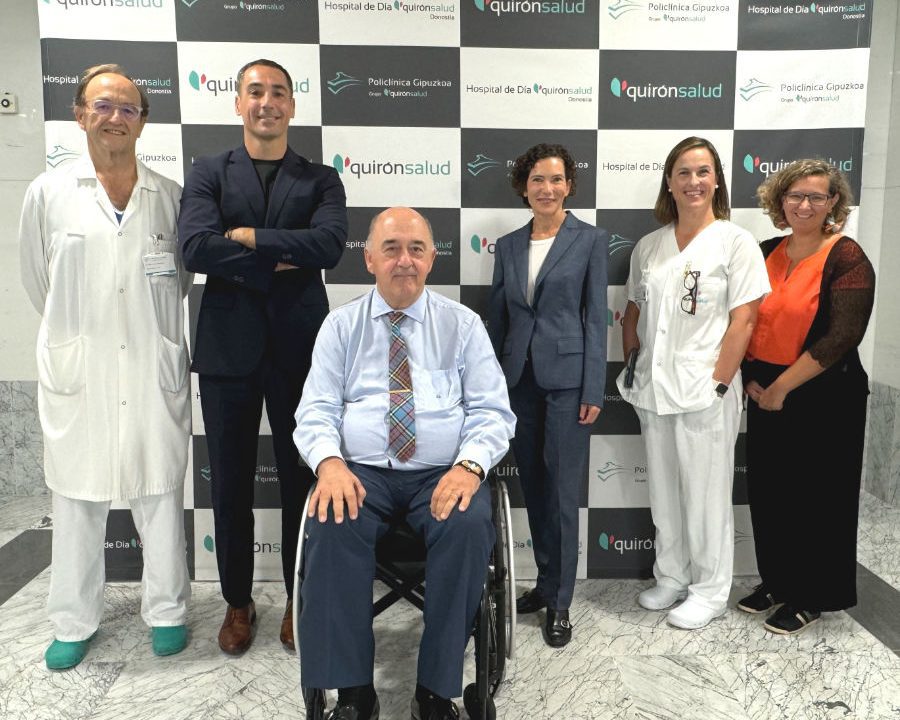
The project, for which it has also been essential to have Dr.. Ana Belén Enguita, pathologist at the International Dermatological Clinic and the Hospital 12 of October, and his team, consists of the installation of the infrastructure of the pathological anatomy laboratory with all its equipment at the Ngosi Hospital in Burundi. But, besides, will allow training local staff so that they can guarantee the long-term sustainability of the laboratory. For it, Recover Foundation makes its online platforms available to the hospital, both to do training and to support with diagnosis through telemedicine. Besides, A field mission will be coordinated with a team of volunteers and professionals from Fundación Recover, the International Dermatology Clinic, and the hospital 12 October; between them, Dr. herself. Enguita, who has designed and will supervise both online and on-site training, and also support for distance training through the Telemedicine platform.
The importance of collaborating
The launch of projects such as this pathological anatomy laboratory is only possible with the collaboration of our partners and allies.. “I think it is always interesting to be up to date with the actions carried out by foundations like Recover to get involved in some way. Personally, I believe that in this type of involvement you always receive much more than you give.”, the specialist reflects.
“It is a privilege for me to work with Fundación Recover, which has not hesitated to offer us all types of financial aid.”, material and logistics to be able to carry out this project. Schopenhauer said that health is not everything, but without it everything else is nothing. “Being able to help improve people's health is truly lucky.”, highlights Dr.. Ricardo Ruiz.
He already does it every day.
If you also want to collaborate, become a Recover member now.